KindredMind
Voice cloning companion for dementia careFamiliar voice answers for dementia patients
Highlights
What you can do with it
- A daughter uses a cloned voice to answer her mother's frequent calls
- A memory care facility reduces patient anxiety with familiar voices
- A caregiver covering multiple patients keeps up with incoming calls
How to use it
- 1 Register an account at kindredmind.care
- 2 Provide a voice sample for cloning
- 3 Create a patient profile with habits, memories, and stories
- 4 Set response guidance and preferences
- 5 Start the service and monitor or adjust conversation records
Who it is for
Pros
- Designed around clinical communication guidance
- Caregiver keeps control over consent and records
- Stated encryption and no-data-sale policy
Limitations
- Paid at CAD 179; the free window is a 45-day trial only
- Voice cloning requires explicit consent and careful handling
- Positioned for Canada and the United States, so availability elsewhere is unclear
What KindredMind is
KindredMind is a voice companionship product for families dealing with dementia. It clones a caregiver voice so that when a patient calls, the response sounds familiar. The design follows the communication guidelines of the Alzheimer's Association and uses a validation therapy protocol, meaning it does not correct or redirect the patient. The service is priced at CAD 179 with a 45-day free trial and a 30-day money-back guarantee, and it states AES-256 encryption plus a policy of never selling user data.
What you can do with it
- Answer patient calls using a cloned caregiver voice.
- Personalize responses from a patient profile covering habits, memories, and stories.
- Keep caregiver control over voice creation and consent.
- Review conversation records and intervene when needed.
- Reduce separation anxiety and caregiver load.
Who it is for
- Families caring for a person with dementia.
- Professional caregivers covering multiple patients.
- Memory care facilities supporting residents.
What to watch out for
The free access is a 45-day trial, after which CAD 179 applies. Voice cloning needs explicit consent from the person recorded, and the emotional weight of a synthetic familiar voice should be considered carefully. The product is positioned for Canada and the United States, so confirm availability and support elsewhere. It is a companionship aid, not a medical device or treatment. Name and archive exported files consistently so you can find and reuse them, and keep a backup copy of key data. When quality matters, export a small draft first to confirm the result before producing the final file. Name and archive exported files consistently so you can find and reuse them, and keep a backup copy of key data.
FAQ
What does it cost?
CAD 179, with a 45-day free trial and a 30-day money-back guarantee.
How is the voice created?
The caregiver records a voice sample, and voice model creation requires explicit recording consent.
Is it a medical device?
No. It is a companionship aid built on simulated presence therapy and validation therapy protocols, not a medical treatment.
Why it is free
What the official page says: free trial
Free limits, trial length and features are decided by the official site and can change at any time.
Product preview
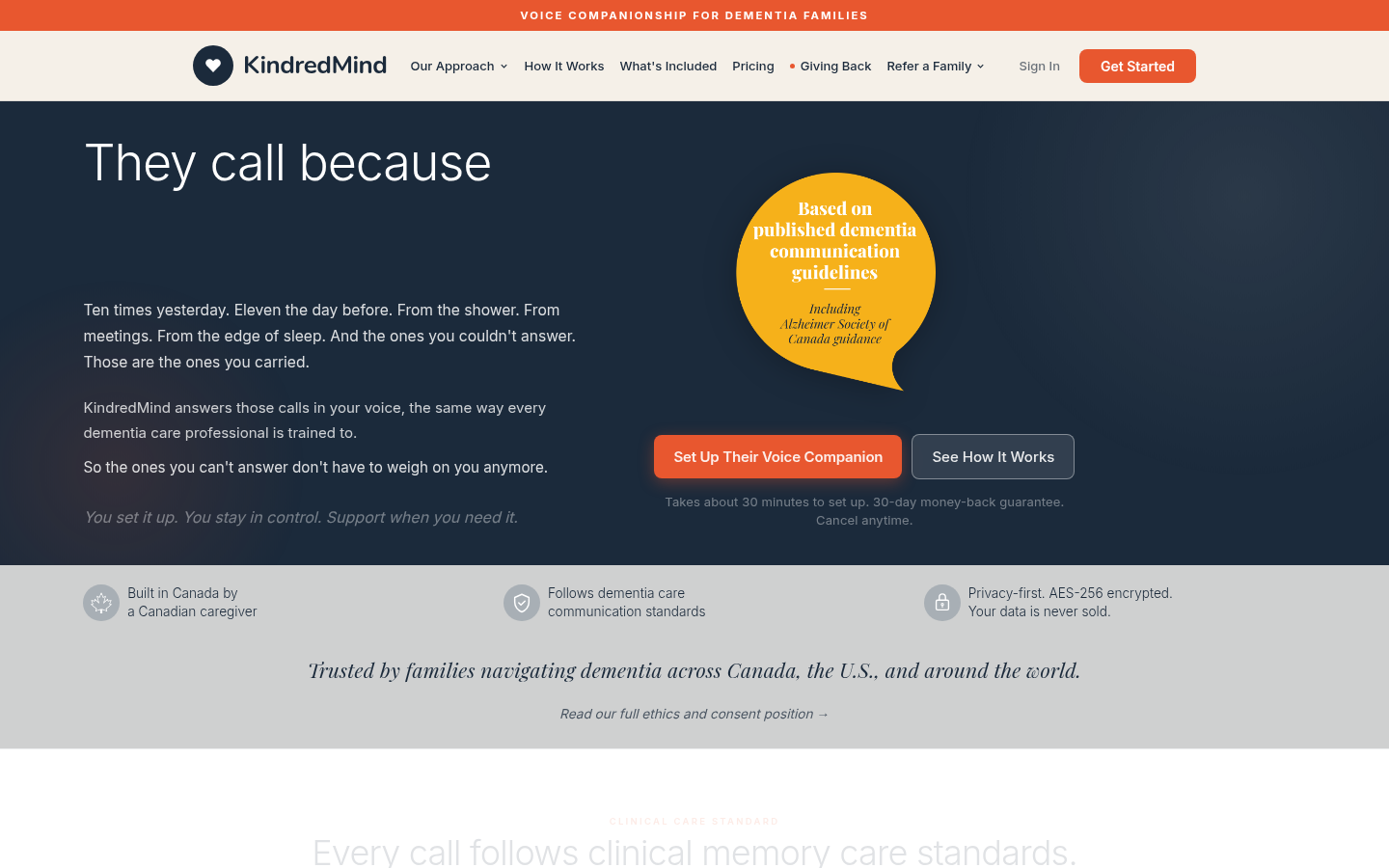
Screenshot archived from the listing page, for preview only.