
Ultravox
Real time voice AI infrastructureLow latency speech for voice agents
Highlights
What you can do with it
- Building voice agents that reply in real time
- Adding low latency speech to an application
- Scaling a conversational voice experience
How to use it
- 1 Start the capped free trial on the Ultravox site
- 2 Connect your app to the speech infrastructure
- 3 Build and test a real time voice agent
- 4 Move to pay as you go or a paid plan as you scale
Who it is for
Pros
- Low latency without first converting speech to text
- Keeps tone and emotion in the interaction
- Trained and run on its own dedicated infrastructure
Limitations
- Free trial is capped and pay as you go has concurrency limits
- Automated calling must follow regional consent and privacy rules, and misuse is your responsibility
- Needs engineering work to integrate
What Ultravox is
Ultravox.ai is a real time speech AI infrastructure layer. It is built to fix common problems in traditional speech systems, such as the delay caused by first turning speech into text and the loss of paralinguistic cues like tone and emotion. The page lists low latency, keeping those vocal cues, and fast, natural, scalable speech interaction as its main advantages. It comes from a research lab and product company that trains its own speech models and runs them on dedicated infrastructure. Pricing includes a free trial described as 5 cents per minute with up to 5 concurrent calls, a pay as you go option with concurrency limits, a professional version at $100 per year, and a custom enterprise plan. It is aimed at developers and enterprises.
What you can do with it
- Build voice agents that respond in real time with low delay
- Keep vocal cues like tone and emotion in the interaction
- Scale speech features for a product or service
- Start on a small free trial before moving to paid usage
Who it is for
- Developers adding speech to an application
- Enterprises building conversational voice experiences
- Teams that need scalable, low latency voice infrastructure
What to watch out for
The free trial is capped, at 5 cents per minute and up to 5 concurrent calls, and pay as you go has concurrency limits, so costs rise as usage grows and free trial terms can change. If you build voice agents for outbound or automated calling, you must follow the call, consent, and privacy rules that apply in your region, and any misuse is your responsibility. Because it is infrastructure, you will need engineering work to integrate it, and it relies on the provider's models staying available and accurate. Plan for ongoing monitoring of latency and cost as you scale.
FAQ
Is Ultravox free?
There is a free trial described as 5 cents per minute with up to 5 concurrent calls, plus pay as you go and paid plans.
What problem does it solve?
It reduces the delay of turning speech into text and keeps vocal cues like tone and emotion for more natural interaction.
Who is it for?
Developers and enterprises building real time, scalable voice agents.
Why it is free
What the official page says: 免费试用免费
Free limits, trial length and features are decided by the official site and can change at any time.
Product preview
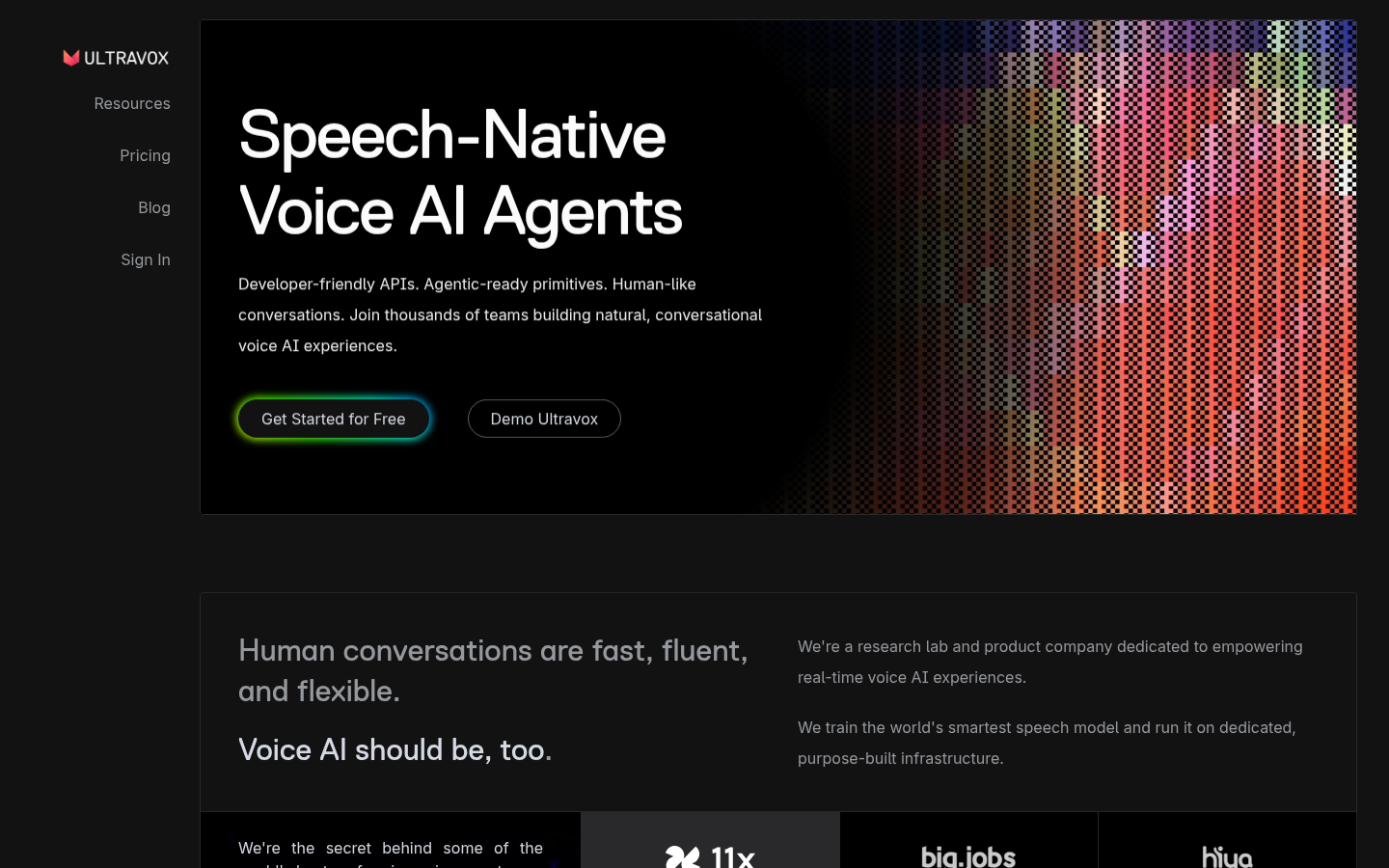
Screenshot archived from the listing page, for preview only.