
Highlights
What you can do with it
- Tracking on-call load across an engineering team
- Spotting engineers at risk of overload before turnover
- Summarizing workload patterns for management review
How to use it
- 1 Install the open-source tool and connect your built-in informations
- 2 Let it collect multi-source on-call data
- 3 Review individual risk scores and AI summaries
- 4 Use the findings to adjust rotations and workload
Who it is for
Pros
- Open source and free to start
- Multi-source data collection gives a fuller picture
- Risk scores make workload patterns easy to compare
- AI summaries save managers reading time
Limitations
- It measures workload patterns, not medical conditions, so scores are prompts for conversation
- Data quality depends on the sources you connect
- Open-source features and support terms can change
- It needs careful privacy handling because it uses engineer data
What On is
On, also known as On Call Health, is an open-source tool supported by Rootly. It detects overload warnings in on-call engineers and helps companies spot fatigue and overload before they turn into falling efficiency and staff turnover. The tool collects multi-source data, calculates individual risk scores, and provides AI analysis and summaries so managers can see where pressure is building. It is positioned as a way for companies to pay more attention to engineer health and work status, enhancing team stability and efficiency. Because it is open source, teams can inspect how the scoring works before they rely on it.
What you can do with it
- Collect on-call data from multiple sources
- Calculate individual overload risk scores
- Read AI-generated analysis and summaries
- Spot fatigue trends before they become turnover
Who it is for
- Engineering managers running on-call rotations
- Platform and SRE teams tracking workload
- Companies that want to reduce burnout and turnover
- Teams that need data for staffing conversations
What to watch out for
The tool measures workload patterns, not medical conditions, so risk scores are a prompt for conversation, not a diagnosis. Data quality depends on the sources you connect, and missing data can skew the scores. Because it is open source and supported by Rootly, features and support terms can change over time. Privacy matters here: be transparent with engineers about what data is collected and how it is used, and keep access to individual scores restricted to people who need it. Start with a small sample to confirm the output meets your expectations before processing the full batch. Free tiers and usage limits can change, so check the current rules on the official page before relying on it long term.
FAQ
What does On do?
It detects overload warnings in on-call engineers by collecting multi-source data and calculating risk scores.
Who supports it?
It is an open-source tool supported by Rootly.
Is it free?
The page says it can be started for free.
Does it diagnose burnout?
No. It flags workload patterns and risk scores; it is not a medical diagnosis.
Why it is free
What the official page says: 免费
Free limits, trial length and features are decided by the official site and can change at any time.
Product preview
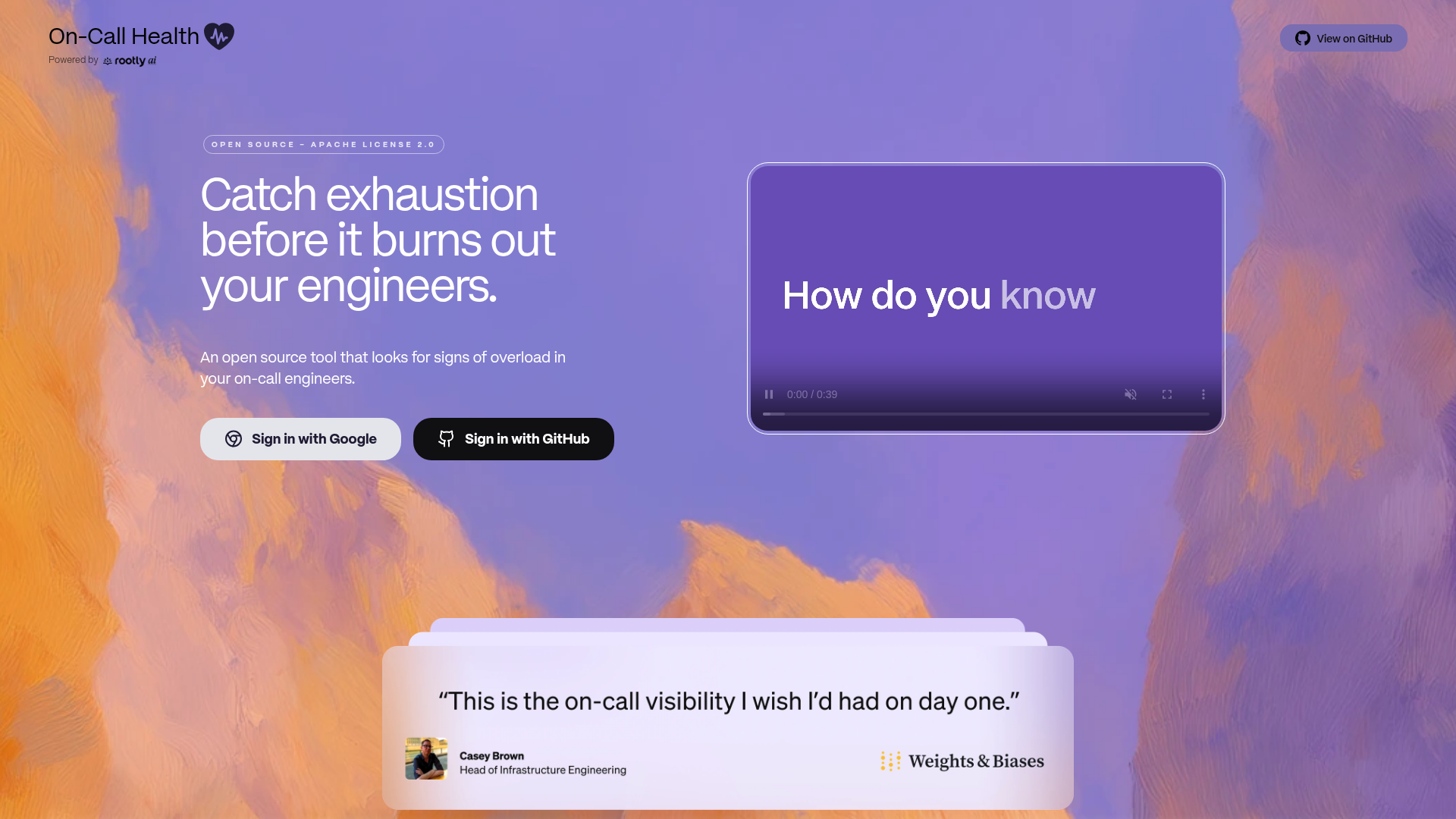
Screenshot archived from the listing page, for preview only.