Peaka
Zero-ETL data integration platformAll your data in one place, no ETL
Highlights
What you can do with it
- Unifying Stripe and HubSpot data with company databases for joint analysis
- Syncing e-commerce data in real time for live reports and recommendations
- Bridging legacy systems and cloud APIs to break down data silos
How to use it
- 1 Sign up for Peaka and open the workspace
- 2 Connect your databases, SaaS tools, and APIs
- 3 Run federated queries or set up real-time replication
- 4 Convert API and NoSQL responses into SQL for analysis
- 5 Use AI assistance to draft and refine queries
Who it is for
Pros
- No complex ETL pipeline to build or maintain
- Streamlined architecture with low operational cost
- A free version is available for smaller workloads
Limitations
- The free version has limits, and heavier use means paid plans
- It depends on the uptime and API stability of connected services
- You still need to understand your data model and basic SQL
What Peaka is
Peaka is a zero-ETL data integration platform. Rather than building complex ETL pipelines, you connect relational and NoSQL databases, SaaS tools, and APIs, then work with them as if they were one store. The feature set covers federated querying, real-time stream data ingestion, real-time data replication through change data capture, API to SQL conversion, NoSQL to SQL conversion, SQL to API conversion, and AI-assisted SQL writing. Peaka is offered in free and paid versions, and the pitch is a streamlined architecture that is quick to set up, cheap to operate, and free of the downtime risk that comes with maintaining heavy pipelines. It is aimed at teams that want multi-source data usable quickly instead of spending weeks on plumbing.
What you can do with it
- Query databases, SaaS apps, and APIs together without ETL jobs
- Stream data in real time or replicate it with change data capture
- Turn API and NoSQL responses into SQL you can join and analyze
- Write SQL faster with AI assistance
Who it is for
- Data analysts who need numbers from many systems in one place
- Teams that want live reports without building data pipelines
- Developers connecting product databases to SaaS tools
What to watch out for
The free version has limits, and heavier workloads push you toward paid plans, so check current pricing before you commit. Peaka sits between your applications and your databases, which means it inherits their uptime and their API changes; if a third-party service alters its interface, your connections need attention. You still need to understand your own data model and know enough SQL to get value from it. A zero-ETL setup also does not replace thinking through data governance, access control, and who is allowed to see which fields, especially when customer and financial records are involved.
FAQ
What does zero-ETL mean here?
It means you can query and combine data from connected systems directly, instead of building and maintaining ETL pipelines that copy everything into one store first.
Which systems can Peaka connect?
Relational and NoSQL databases, SaaS tools, and APIs, according to the product description.
Is there a free option?
Yes. Peaka offers free and paid versions, with the paid tiers covering larger or more demanding workloads.
Why it is free
What the official page says: 免费
Free limits, trial length and features are decided by the official site and can change at any time.
Product preview
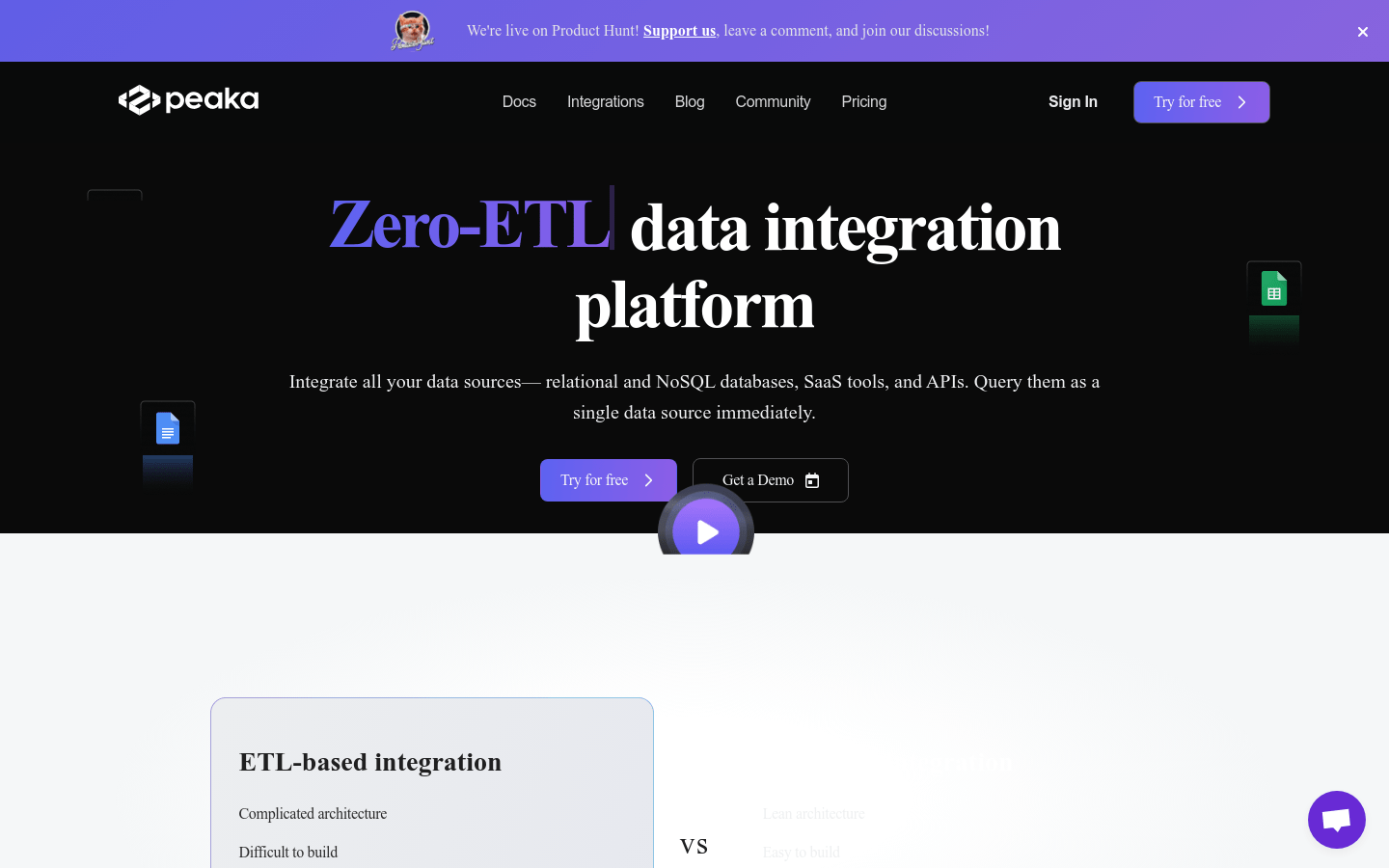
Screenshot archived from the listing page, for preview only.