OpenLIT
Open-source observability for LLM appsMonitor and optimize your AI applications
Highlights
What you can do with it
- A team manages and versions many AI prompts
- A data scientist compares LLM performance and cost
- An enterprise stores API keys securely
How to use it
- 1 Visit the OpenLIT site and read the docs
- 2 Clone the project or start it with docker-compose
- 3 Add openlit.init() to your AI application
- 4 Use the SDKs for monitoring and key management
- 5 Compare models and manage prompts from the dashboard
Who it is for
Pros
- Open source and self-hostable
- OpenTelemetry-based tracing
- Prompt and key management included
Limitations
- Self-hosting means you maintain the infrastructure
- Developer tool with a setup learning curve
- Open-source availability and features can change
What OpenLIT is
OpenLIT is an open-source platform focused on the observability of generative AI and large language model applications. It helps developers track requests, response times, and costs, with native OpenTelemetry support so it fits into existing tracing setups. It also offers exception monitoring through Python and TypeScript SDKs, prompt management with version control, secure key management, and Openground testing to compare different LLMs on performance and cost. Because it is open source, you can self-host it to keep your data private. The core is free to use and aimed at AI developers, data scientists, and enterprises.
What you can do with it
- Trace AI application requests, response times, and costs
- Monitor exceptions with Python and TypeScript SDKs
- Manage prompts with version control in one place
- Compare LLMs on performance and cost with Openground
Who it is for
- AI developers building LLM applications
- Data scientists comparing models and costs
- Enterprises that need to self-host for privacy
- Teams that want OpenTelemetry-based monitoring
What to watch out for
Self-hosting gives you control but also means you maintain the infrastructure, updates, and security yourself, which takes time and skill. It is a developer tool, so there is a setup learning curve, and you should expect to read the docs before it works well. As an open-source project, availability and features can change between versions, so pin what you use and test upgrades. Monitor any keys and data you route through it carefully, since you are responsible for your own deployment. For team use, agree on naming and editing conventions in advance to avoid version conflicts or duplicated work. Name and archive exported files consistently so you can find and reuse them, and keep a backup copy of key data.
FAQ
What is OpenLIT?
It is an open-source platform for observing and optimizing generative AI and LLM applications.
Can I self-host it?
Yes. Being open source, you can self-host to keep your data private.
What does it track?
It tracks requests, response times, and costs, and supports exception monitoring and prompt management.
Why it is free
What the official page says: for free
Free limits, trial length and features are decided by the official site and can change at any time.
Product preview
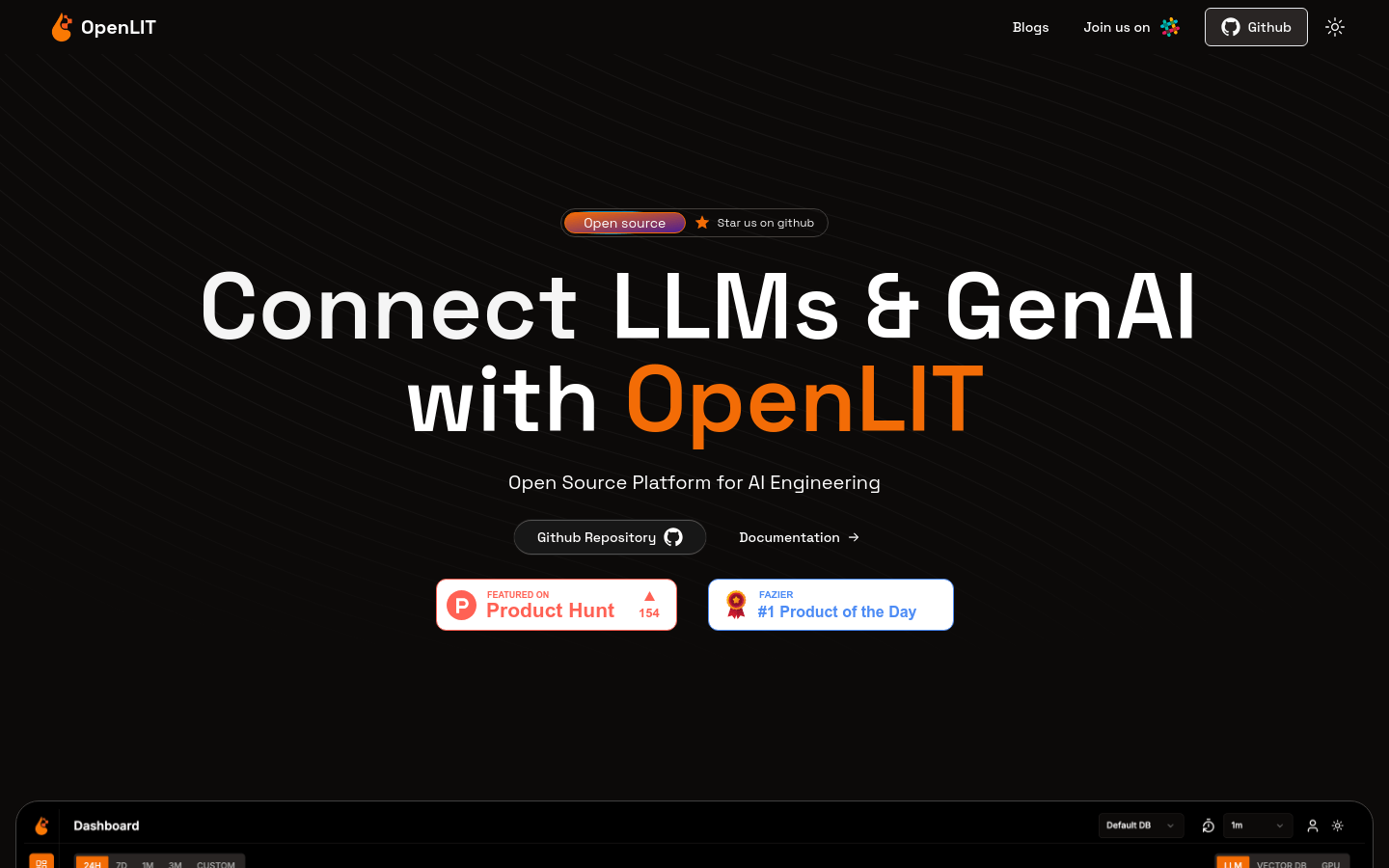
Screenshot archived from the listing page, for preview only.