OpenCrab
Ontology and graph RAG knowledge platformDocuments into reusable ontology packages
Highlights
What you can do with it
- Marketing teams organize research and competitor analysis into a knowledge graph
- Channel operators turn audience feedback into ontology packages for strategy
- Brand teams analyze customer data for product decisions
How to use it
- 1 Ingest document URLs, notes, or research packages from supported sources
- 2 Extract entities, concepts, evidence, relationships, and claims
- 3 Save the ontology graph for search, reasoning, and reuse
- 4 Connect the OpenCrab MCP client and ask questions in the AI workspace
Who it is for
Pros
- Gives scattered documents a reusable structure
- Graph RAG plus MCP supports live querying
- Packages can be turned into agents for repeated work
Limitations
- Ontology modeling has a learning curve for new users
- Output quality depends on the quality of ingested material
- The free version is limited compared with Pro and Expert
- Some source formats, such as HWP, point to a Korean-language context
What OpenCrab is
OpenCrab is an ontology and graph RAG platform owned and operated by AgentKorea. It takes documents, online research, and domain knowledge and turns them into ontology packages and graph RAG workflows, so scattered material becomes a structure you can search and reuse. Ingested sources such as PDF, HWP, Notion, and GitHub content become evidence graphs, organized across a meta-ontology of nine spaces that cover topics, evidence, claims, policies, and levers. Querying runs through graph RAG and MCP, and packages can be converted into skills and then into agents that run repeatedly. Access spans web, desktop, and enterprise workspace, with a free version plus Pro at $10 per month and Expert at $30 per month.
What you can do with it
- Ingest documents, notes, and research packages from multiple sources.
- Extract entities, concepts, evidence, relationships, and claims from the material.
- Save an ontology graph that can be searched, reasoned over, and reused.
- Connect the MCP client and ask questions about the graph inside an AI workspace.
- Turn ontology packages into skills and then into repeatable professional agents.
Who it is for
- Researchers and analysts who want papers and reports structured as evidence graphs.
- Domain experts who want to package knowledge and distribute or sell it.
- AI developers who need grounded agents and a single endpoint for knowledge.
What to watch out for
Ontology work is not a upload-and-forget job: the structure only becomes useful if the source material is clean and the concepts are defined carefully, which means a learning curve. Graph quality depends entirely on what you ingest, so weak inputs produce weak graphs. The free version is limited next to Pro and Expert, so heavy querying and team features will push you onto a paid plan. Some source formats and the HWP support point to a Korean-language context, so check documentation and support language fit before adopting it.
FAQ
Is there a free version?
Yes, alongside Pro at $10 per month and Expert at $30 per month.
Which sources can it ingest?
It supports PDF, OCR, CLIP, Notion, GitHub, and similar sources, including HWP documents.
What is graph RAG here?
It lets you query from active documents to the full graph RAG process in real workflows through MCP.
Who operates it?
OpenCrab is owned and operated by AgentKorea.
Why it is free
What the official page says: free version
Free limits, trial length and features are decided by the official site and can change at any time.
Product preview
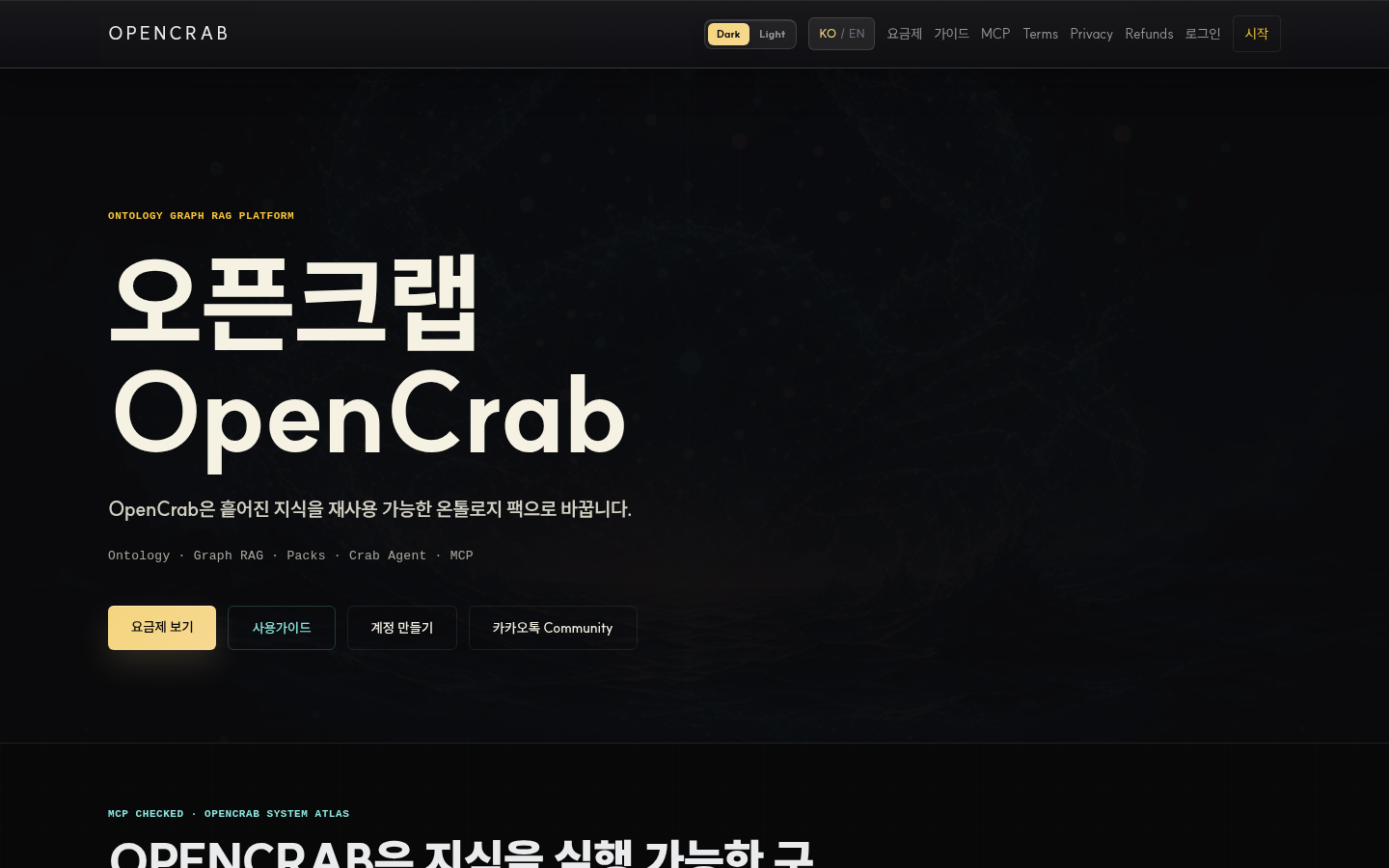
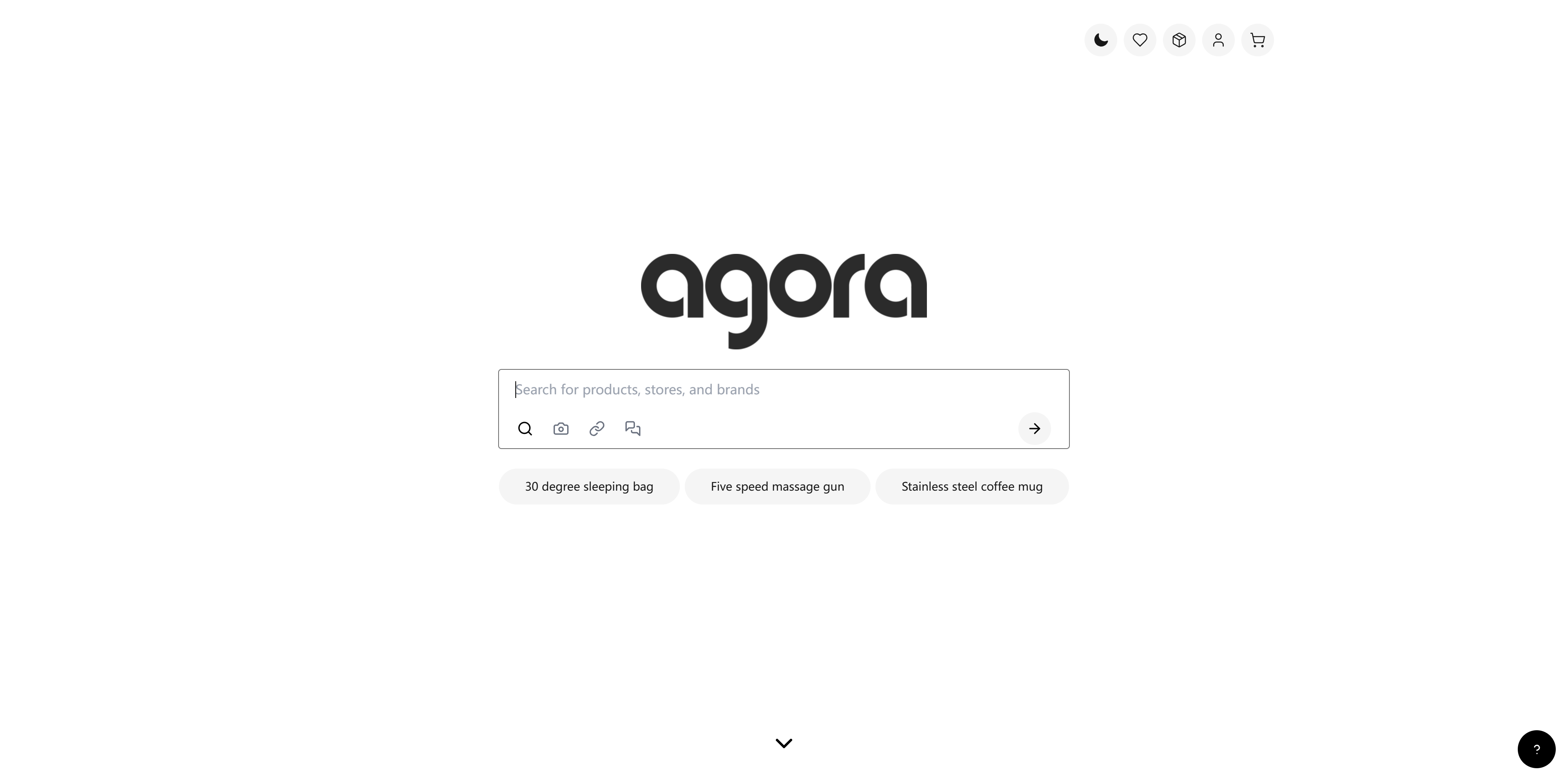
Screenshot archived from the listing page, for preview only.