Lumina
AI search for researchersFind academic material faster
Highlights
What you can do with it
- Search academic databases for papers on a topic
- Find source material while writing a literature review
- Pull research data into other tools through the API
How to use it
- 1 Visit the Lumina website and register an account.
- 2 Log in and enter keywords or a research question.
- 3 Review the results and open literature of interest.
- 4 Use the API if you need data inside other tools.
- 5 Check the help docs or contact support if issues come up.
Who it is for
Pros
- Free trial available before paying
- Simple interface that is quick to learn
- API access and a Discord community for support
Limitations
- Free trial may end, and paid pricing is not stated on the page
- Relevance claims come from the vendor and need your own testing
- Coverage depends on the databases it connects to
What Lumina is
Lumina is an AI search engine built specifically for research. It uses AI to understand query intent and then pulls the most relevant content from academic databases, which is a different job from general web search. The company says its relevance in academic search is five times greater than Google Scholar, a claim worth testing against your own topics before you switch. Lumina is incubated by Y Combinator, and the site offers a free trial so you can register and try it before paying anything. The interface is clean and simple, which helps new users get started quickly without a long tutorial.
What you can do with it
- Search academic databases by keyword or research question
- Open and read literature directly from the results list
- Pull data into other research tools through API access
- Get help through detailed docs, contact channels, and a Discord community
Who it is for
- Academic researchers who need to find papers quickly
- Students working on literature reviews and citations
- Research teams that want programmatic access to search results
What to watch out for
The free trial will end at some point, and the site does not state what the paid plans cost, so budget for that if you plan to depend on it. The five times relevance figure is a vendor claim, so run your own comparison on topics you actually study rather than trusting the marketing number. Coverage depends on which databases Lumina connects to, so niche or very new fields may see thinner results than broad ones. A clean interface helps, but search quality still varies by subject area, and the results still need the same critical reading you would give any source.
FAQ
Does Lumina have a free trial?
Yes. The site says users can register and use the service during a free trial period.
How is it different from Google Scholar?
The company says Lumina delivers five times the relevance in academic research compared with Google Scholar.
Can I connect it to other tools?
Yes, Lumina supports data access via API integration for use with other research tools.
Why it is free
What the official page says: free trial
Free limits, trial length and features are decided by the official site and can change at any time.
Product preview
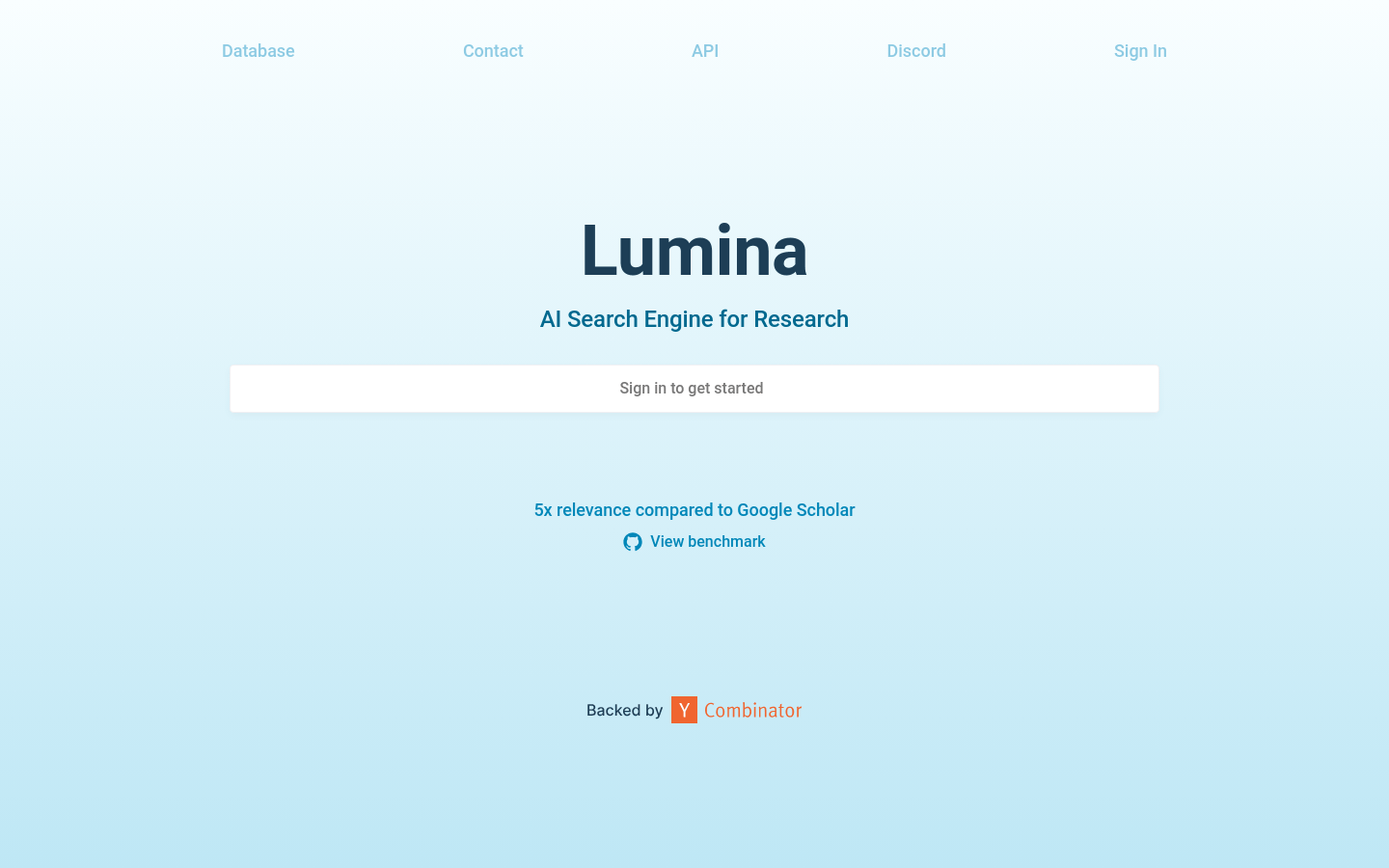
Screenshot archived from the listing page, for preview only.